
From Broken to Healed: The Journey That Changed Everything
Updated: Feb 4
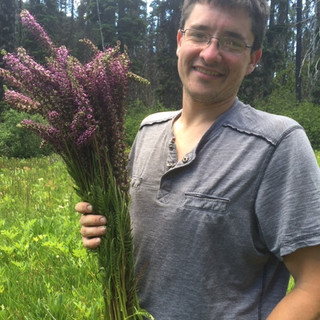
By Trevor Clark | Neuropathy Herbalist

I was seventeen years old when my back broke. Not the way you'd expect. Not in a gym, not on a playing field. I was a senior in high school, coming back from our national football championship, when I turned a corner on the interstate and slammed on my brakes. Traffic had stopped dead ahead of me. I stopped in time. The guy behind me, doing seventy, did not.
He slammed me into the truck in front of me so hard that both ends of my car crumpled into the pavement. The asphalt actually peeled up.
At the time, I thought I had whiplash. I thought it would go away.
It did not go away. What came next was years of chronic pain, neuropathy, and a fight to get my life back that no one told me was coming.
Three Months Later, Everything Changed
About three months after the accident, I woke up in pain so intense I could barely get out of bed. My parents rushed me to the emergency room, and imaging revealed what I hadn't known: my spine was broken. A perfect stress fracture at my L3 lumbar vertebra. The disc had begun separating at the fracture site, shifting, and irritating the surrounding nerves. The pain was described clinically as intractable. It was a word I quickly learned to hate.
The earliest they could schedule my spinal fusion? A year out.
So they made me a full-body brace; a contour-casted plastic shell that I strapped on every single morning. I finished my last year of high school wearing it. The brace brought my pain down from what I thought was a 7 or 8 out of 10 to something I could sit through in class. But even then, the pain was getting worse with every passing month.
I graduated. I couldn't start college; there was no point when I'd have to stop as soon as the surgery was scheduled. So I waited. I lived with my brother in his college town, tried a semester of community college, and struggled to get through even the most basic coursework. Every day, the pain crept higher. I had no idea that neuropathy was about to become the real battle.
The Surgery That Was Supposed to Fix Everything
When I finally had my posterior spinal fusion, the surgical team told me everything went well. And in one sense, it did. The fracture was repaired.
But when I woke up, something was terribly wrong.
My hands were numb. My right foot was numb. My entire left leg was numb. And all of it felt like it was on fire. Like I had plunged my hands and feet into glowing embers and left them there. The pain was unlike anything I had experienced before, and I had already known real pain. This was nerve pain, though I didn't have the words for it yet. It was peripheral neuropathy; a serious complication that had developed during surgery. And it would define the next several years of my life.
Before the operation, I had no nerve issues. My diabetes was well-controlled. There was no reason for neuropathy to develop. But it did.
When I told my surgical team what I was feeling, they gave me narcotic painkillers. What most people don't realize is that narcotics don't actually treat neuropathy. They might take the edge off; they might distract you from it. But the nerve pain itself remains almost fully intact underneath. I was in 8 or 9 out of 10 pain, and the medications they were giving me were barely touching my neuropathy.
After two or three months of me describing symptoms they insisted weren't happening, my surgical team got frustrated. They told me the surgery had been perfect, that nothing could have gone wrong, that what I was describing wasn't real. They said I must be seeking drugs. They stopped seeing me.
I was eighteen years old.
The Years in Bed
What followed was one of the darkest stretches of my life, and I want to be honest about what it actually looked like. I think it matters for anyone reading this who is in the middle of something similar.
I went through ten or eleven doctors trying to find someone willing to treat me. Many of them acknowledged that my case made sense; that I genuinely needed help. But they were afraid. I was young, and prescribing high-dose narcotics to a teenager raised flags with the DEA. Doctor after doctor told me my situation was legitimate, then sent me to someone else.
Eventually, I found a rheumatologist who was willing to take me on. He wasn't afraid. He started doing what the standard of care called for. Hormone replacement therapy for the hormones my body had stopped producing. Stimulants to keep me awake because my body had stopped making cortisol. Sleep medication because my nervous system was so overstimulated. Muscle relaxers, nerve medications, opiates; and then more opiates as my tolerance grew every few months. None of it touched my neuropathy. The nerve pain just kept burning.
Within a short time, I was on eleven medications.
My daily life was this: I was in bed. I could walk, but only barely, and only with a cane. Getting to the bathroom was ten feet away; it could take a while. A shower and clean clothes might take forty minutes. I was in tears for days at a time from the pain. I could barely eat. I was living off grapenuts cereal and nutrishakes. My mom tried to cook for me, but my gut was in such bad shape that I could barely get food down.
I was declared legally disabled for life.
Fibromyalgia had set in on top of the neuropathy. My endocrine system had essentially shut down. I was passing out constantly because my body had stopped producing cortisol. My hands were numb but felt like they were stuck in a fire, all the time. The neuropathy wasn't going anywhere, and neither was I. I couldn't see a future where any of this changed.
And my doctor, the one good one who was actually fighting for me, knew it too.
The Conversation That Opened a Door
About three and a half years into this, I went in for a routine follow-up and medication adjustment. My rheumatologist sat me down and told me something I'll never forget.
He said that at the rate my medications were going, in ten or fifteen years, I was going to have serious liver problems. It was a hazy time; I won't pretend otherwise. The way I remember it is that he was telling me I could die. Not today, not tomorrow, but down the road, the medications that were keeping me functional were slowly destroying my liver.
He said he was going to keep treating me the way he knew how. But then he shared something personal. He'd grown up as a missionary's kid in Guatemala. His parents would sometimes offer medications to the local people when they got sick. But just as often, those people would reach for plants out of the forest instead. And they seemed to work.
"Maybe there's an herb that could help you," he said.
He wasn't making a promise. He wasn't even making a recommendation, really. He was a good doctor who had exhausted every tool in his kit and was honest enough to say so. But that sentence opened a door I had never even known was there.
The Library, the Librarians, and the Keyword "Pain"
Going to the library was an ordeal. I limped in there with my cane, loaded up on medication, looking about as sickly as a person can look. But I had a mission.
I asked the librarians to help me with a research project. God bless librarians; they were excited about it. They loved having a project. They got to know me, this strange, crippled guy who kept showing up looking for obscure information. Together, we dug into ethnobotany reports. These are studies by botanists who research how indigenous cultures around the world have traditionally used plants for medicine.
We searched journals, physical databases, and what was available online at the time, which wasn't much. And I searched for one keyword: pain.
That's a broad keyword, looking back. Incredibly broad. The neuropathy was the thing that haunted me most; it burned constantly and nothing I had tried so far touched it. But I didn't know yet how to search for that specifically. So I cast a wide net.
My system was simple. I would find a herb that had been referenced for pain in one of these reports. I would then go find a version of it; the best quality I could track down. I would take it every day for two weeks. If it didn't work, I would try a different form of the same herb, or a different brand, just in case quality was the issue. Another two weeks. Then I would go back to searching.
I had no background in botanical medicine. I didn't even know the difference between a tincture and a capsule, not really. But I did know that there were differences in quality; that not all versions of something are created equal. That instinct turned out to matter more than I realized.
Sourcing was its own adventure. There was no Amazon back then. One herb was a traditional Chinese medicine ingredient, and I tracked down a small traditional Chinese medicine shop in our area run by an older gentleman. I went in, asked for the herb, and he looked at me like I'd lost my mind. "Why do you want that?" he asked. "It's not going to help you." He sold it to me anyway.
He was right. It didn't help.
The Third Herb
On the third herb, a tree bark tea called Pau d' Arco sourced from Brazil, something shifted.
Here's what makes this story almost impossible to explain rationally: Pau d' Arco is not traditionally used for pain. It's primarily known as an antifungal and has been researched for certain types of cancer. I still don't fully understand how it came up in my search for pain. It shouldn't have. But it did.
I tried the first version, a tincture, for two weeks. Nothing. Then I tried a second version, a tea. I wasn't dosing it carefully. I didn't know how. I just took what I thought was a lot; probably three or four times what the box suggested. And I drank it every day.
Two weeks in, the fibromyalgia symptoms started lifting. Not gradually, not subtly. It was like a switch flipped. Suddenly my body was producing energy again on its own. I stopped the testosterone replacement; I didn't need it anymore. My body was making its own. I stopped the stimulant medication; my cortisol was back. One by one, I started discontinuing drugs.
The neuropathy was still there. It was still burning. But the fibromyalgia was lifting, and for the first time in years, I could see past the fog.
I didn't tell anyone what I was doing. I was afraid that if I told a doctor I was getting better on my own, they'd take away my medications. I wasn't ready to lose that safety net, not yet.
Walking Into the Doctor's Office Without a Cane
A few months later, I walked into my rheumatologist's office for my follow-up appointment. No cane. A little pep in my step. A smile on my face.
The look on my doctor's face was something I will carry with me for the rest of my life.
I told him about the Pau d' Arco tea. His eyes went wide. "Whoa," he said. He told me he was going to share this with some of his other fibromyalgia patients. He was blown away. And then he offered me a job in his office.
I turned it down. Not because I wasn't grateful. But because something bigger had started burning in me. I needed to understand why this had worked. I needed to understand herbs; not just the one that had saved me, but all of them. I needed to go deep.
The Wall I Hit, and What I Did About It
Getting off the opiate medications was its own war. I had been on them for over three years; a massive dose of methadone, high enough that the pharmacy had to special-order it every month. I was physically addicted, even though I had no desire to be on them. I researched tapering protocols online, made my own step-down plan, and did it without telling anyone except my parents, who I asked simply not to bother me for a few days while I locked myself in the basement.
I had seizures during the final withdrawal. It was brutal. But I got through it.
And then I threw myself into learning.
I read everything. Every book at the library, from the most casual wellness guides to serious academic texts on pharmacognosy. I studied pharmaceutical drugs the same way, memorizing mechanisms of action and pharmacodynamics, because I wanted to understand exactly what had been done to my body and why. I read online forums and research databases.
And I quickly hit a wall.
More than half of the information I was finding about herbs felt like it was inconsistent, questionable, or outright wrong. The herbal world, I discovered, was full of noise. Pharmaceutical research has well-documented mechanisms and mostly reliable information. Herbal medicine was a landscape of contradictions, to my untrained eye. I couldn't learn the way I wanted to learn. I needed structured education, real science, and real mentorship.
So I started looking for a school.
Finding Bastyr
I had no background in natural health or herbalism. I didn't even know that incredible herbal practitioners existed with small schools and certificate programs. I only knew to look for universities.
And I found exactly one accredited undergraduate program in the country that offered a degree in herbal medicine: a Bachelor of Science in Herbal Sciences, described as a multidisciplinary study of botanical medicine, at Bastyr University, just outside Seattle, Washington.
The program was rigorous. It included pre-med and pharmacy-level sciences; organic chemistry, biochemistry, pharmacology. It covered traditional Western herbalism in depth, with its roots in European Galenic medicine and its American evolution through the mixing of Native American and African American herbal traditions. It taught research methods and the assessment of clinical outcomes. It was exactly what I needed.
I did my prerequisite coursework at a community college, applied, and was accepted. I had never been to Seattle. I had never seen the campus. I went out there sight unseen, driven by nothing but the need to understand what had given me my life back and the growing conviction that I could use that knowledge to help others.
The Neuropathy Breakthrough
The fibromyalgia was gone, but the neuropathy remained. It wasn't as severe as it had been when I was bedridden; my overall health had improved dramatically now that I was up and moving, eating better, and living among people at Bastyr who understood nutrition and wellness in ways I was just beginning to learn. But the burning was still there. The numbness was still there.
During my first year at Bastyr, a roommate who was in the naturopathic medical program mentioned they'd come across some PubMed research on treating neuropathy. Chemotherapy-induced neuropathy, diabetic neuropathy, different causes, but the supplement protocol seemed to work across the board.
I went into PubMed myself and started reading. I pulled every study I could find on neuropathy treatment. I started trying the supplements that kept showing up in the research. And at the same time, I was learning about herbs for the nervous system in my classes. I started experimenting and combining what the research suggested with what I was learning in my materia medica classes.
Slowly, the neuropathy started to lift. Not overnight, not like the fibromyalgia had, but it was real and it was measurable. Within weeks I was noticing results, and within months it was gone.
I still had flare-ups when inflammation spiked, usually from overuse or repetitive motion. But I knew how to manage it now. I understood what my body needed, and I had the tools to respond.
Why This Story Matters
I'm not writing this to tell you that herbs will cure everything. They won't. And I'm not writing this to suggest you should do what I did; withdrawing yourself off heavy narcotics alone, in a basement, is not something I'd recommend to anyone. I was desperate, and I was blessed in ways I can't fully explain.
What I am writing this to say is this: I was told I would be like this for the rest of my life. I was told it would only get worse. I was declared legally disabled at eighteen years old. And I found my way back; not through a single miracle cure, but through curiosity, stubbornness, and a willingness to look for answers when the standard options had run out.
That journey is why I do what I do now. Everything I have learned, every herb I have studied, every hour I have spent in research and in the field, it all traces back to that library, those librarians, and a tree bark tea from Brazil that had no business working the way it did. And it's why I built the Neuropathy Herbalist; specifically to help people suffering from neuropathy find their own way back to a better life.
If you are living with neuropathy, I want you to know: the door is open. I have dedicated my career to understanding this condition and to helping people find relief. Come work with me. Let's find your path forward together.

Trevor Clark is an herbalist and the founder of Neuropathy Herbalist and Clark's Herbal Remedies. He holds a Bachelor of Science in Herbal Sciences from Bastyr University. He has over 15 years of experience working in herbal product development, clinical practice, and botanical medicine research, including work at the Bastyr University Research Institute and Fred Hutchinson Cancer Research Center. His work is rooted in his own healing journey and driven by a mission to help others find the same healing.
Learn more at neuropathyherbalist.com


Comments